The Dynasty Guru 2026 Positional Rankings – Catchers 31 – 40

The Dynasty Guru Annual Ranking Season is upon us! Up next, the catchers! The rankings presented here are the composite rankings of all the writers at The Dynasty Guru, and after healthy debate and only a little name-calling, we are ready to share them with you. The comments below each tier are the work of the writer cited at the end of the section. Don’t forget to check out Chris and Drew’s analysis of each position on the Join the Ranks podcast.
31 – 40
| Rank | Player | Avg | Min | Max |
|---|---|---|---|---|
| 31 | Ryan Jeffers | 30.4 | 22 | 38 |
| 32 | Harry Ford | 32.3 | 25 | 44 |
| 33 | Eduardo Tait | 32.6 | 27 | 45 |
| 34 | Carlos Narváez | 36 | 23 | 49 |
| 35 | Jeferson Quero | 37.2 | 24 | 73 |
| 36 | Joe Mack | 37.5 | 23 | 47 |
| 37 | Ethan Salas | 40.9 | 21 | 73 |
| 38 | Bo Naylor | 46.2 | 32 | 73 |
| 39 | Carson Kelly | 47.3 | 30 | 73 |
| 40 | Keibert Ruiz | 48.9 | 26 | 73 |
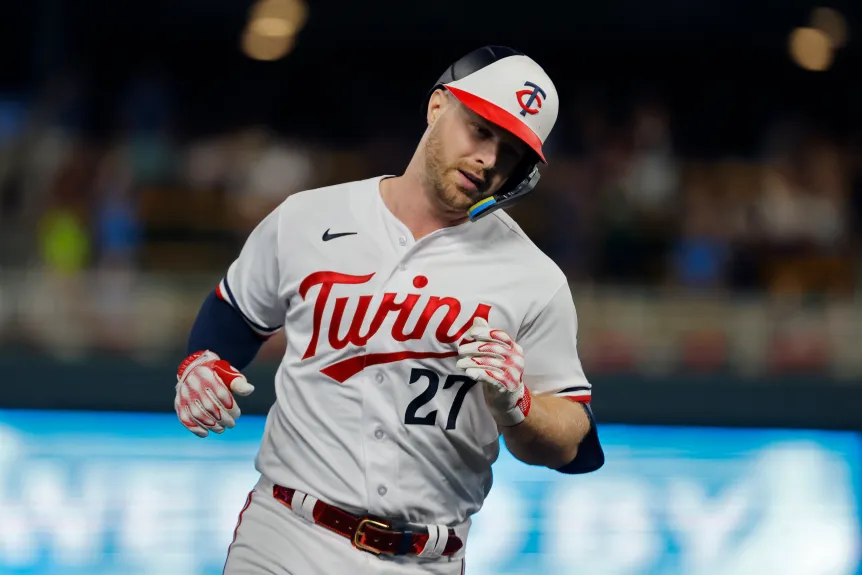
Ryan Jeffers hit just 9 home runs in 2025 after hitting 14 in 2023 and 21 in 2024. What happened? Despite the power dip Jeffers has maintained his bat speed and his average exit velocity actually increased by 3 miles per hour. Jeffers’s batted ball profile showed a significant increase in line drives at the expense of his flyballs. Jeffers also pulled the lowest percentage of his batted balls in his career, with most of his contact going to the middle of the diamond. If he can start pulling the ball again, he should get back into the 15-20 home run range which makes him a good offensive catcher. Jeffers should also see a decent number of appearances at DH for the Twins this year, which helps his fantasy value.
After being buried behind Cal Raleigh in Seattle, Harry Ford was traded to the Washington Nationals this offseason. This is a boon for Ford, and he presents as unique a profile at catcher as I’ve seen in a long time. Ford possesses very little power, as his 90th percentile and maximum exit velocities are below average despite above average barrel rates. Ford does a good job of managing the strike zone and getting on base. His speed will help his BABIP, and he is a candidate to steal 15-20 bases if he can win enough playing time. Those steals will come at a price as Ford may not break double digits in homers.
Eduardo Tait is a slugging 19-year-old catcher who was dealt at the trade deadline last season by the Phillies to the Twins. He spent most of his season with the Phillies’ Single-A Clearwater team, hitting .251/.322/.436 with 11 home runs. He had an acceptable 20% strikeout rate in the minors but only a 7.4% walk rate. Tait’s main flaw right now is that he’s a highly aggressive hitter, swinging at 40% of the pitches out of the strike zone. When he gets a hittable pitch, Tait does a good job of pulling fly balls in the air while registering excellent exit velocities, including a 114-mph maximum EV. Tait is a catcher worth owning in leagues where more than 100 total prospects are owned.
Carlos Narváez should be the main catcher for the Red Sox this season after hitting 15 homers and a 100 OPS+ in his first full season in the Major Leagues. Narváez took full advantage of the Green Monster in Boston hitting .273/.341/.479 at home in 2025. He is mostly a defensive catcher outside of Fenway Park and his Baseball Savant page reflects this. Narváez suffered a hand injury in mid-June which may have hampered him at the plate as he struggled mightily in the second half. 2025 was his first full season in the Major Leagues and was his best offensive season as a professional. His best use-case might be as a stream when he’s playing at home, and he should hold onto his position all season long if healthy given his strong glove.
Two seasons ago Jeferson Quero was one of the best defensive catchers in the minor leagues. He also paired his glove with a bat that was beginning to flash as being at least above average at Double-A Biloxi as a 20-year-old in 2023. Quero tore his labrum one game into his 2024 season and did not return as the same player. After regularly throwing out 30+% of base stealers, in 2025 he only managed 19% and teams ran on him more than they had since rookie ball. If Quero’s arm strength doesn’t return, his bat may not profile at another position which limits his opportunities to contribute to your fantasy team. Quero has a chance to back up William Contreras and audition for a future starting role in 2027. If he shows he can be a strong defender again, his bat should make him an above average fantasy catcher.
Speaking of glove first prospect catchers, Joe Mack should also see some Major League playing time in 2026. He has some swing and miss in his game and will chase pitches out of the strike zone. In a way he’s a very similar prospect to Carson Williams. If they can improve their control of the strike zone and make more contact, there’s good power numbers to be attained. However, it looks like that power will be paired with a low batting average and on-base percentage. Mack has advantages over Williams in this comparison because a lot of a catching prospect’s opportunities to win jobs stems from their glove. Mack should warrant a 2026 call up to the Marlins on the merit of his glove alone.
The Padres pushed Ethan Salas well beyond what any reasonable expectation could have been as a 17-year-old making 9 appearances in Double-A San Antonio. He slashed .267/.350/.487 in 48 games that year, showing that he could handle Single-A pitching at an age when most kids are completing their sophomore year of high school. Salas was limited to just 10 games in 2025 after suffering an early season stress fracture in his back. He is expected to start 2026 completely healthy and given that he’s going to start next season at age 19, there is still plenty of time for his bat to develop.
Bo Naylor was billed as a bat-first catcher whose glove had a lot of catching up to do as he started his professional career. Now his bat is lagging behind his glove. Naylor is a solid defensive catcher, and the Guardians seem committed to starting him regularly. He is a career .205/.286/.384 hitter. He does a fine job of controlling the zone already, but his offensive potential looks limited without some improvements. His bat speed is merely average, and he posts below average exit velocities. I try not to read September hot streaks as next season’s breakout, but it’s worth mentioning that Naylor finished 2025 strong and reportedly made some swing adjustments this offseason. He’ll just be entering his prime at 26 to start next season.
Eight years ago, Carson Kelly was a consensus top 60 prospect. Unfortunately for Kelly he was stuck behind Yadier Molina and was traded to Arizona in 2019. He posted a very solid .245/.348/.478 season with 18 home runs in his rookie season. Since that season Kelly struggled at the plate and bounced around as a backup until 2025 with the Cubs. He matched his rookie output as a 30-year-old last year, appearing in over 100 games for the first time since 2022. Kelly should see the lion’s share of games behind the plate again for the Cubs in 2026, and most projection systems suggest that he can repeat his numbers.
The Nationals signed Keibert Ruiz to a 7-year contract (plus two club options) before the 2024 season to be the long-term catcher in Washington D.C. Ruiz scuffled offensively and defensively in 2024, then battled concussion symptoms after getting hit in the head with a pitch in June of 2025. He produced only a .595 OPS last year, and the Nationals brought in prospect Harry Ford this past offseason to compete to be the catcher of the Nationals’ future. Ruiz is not facing any lingering restrictions from his concussion, and his contract should keep him with at least a backup spot in the Majors. It would not be surprising to see Harry Ford eat into Ruiz’s playing time if Ruiz doesn’t get back to the form that earned him that contract.
(Brandon Ring)
The Author


